
How to have a more sustainable laundry routine?
- Renew Blue
- Jan 28, 2022
- 3 min read

Updated: Feb 21, 2022
To either reduce your environmental impact or support your local artisans and protect garment labors working in exploitative working environments, you are rethinking your fashion needs from a sustainable perspective. Buying from local artisans and choosing natural fibers, you are reducing the environmental impact caused by the garment industry. Most of the sustainable fashion conversations focuses on what can be a bought that has the least environmental impact, but we seldom talk about the practical steps that can take care of the fabric and prolong the life of things we already own.

Personally, sustainability in fashion and garment care came as something I learnt from my family long before sustainability became a consumer act and a lifestyle choice. Garment care and cleaning too contribute to greenhouse gas emissions. Here are six practical ways on how you can make your laundry routine more sustainable and prolong the life of your clothes.
1. Wash less often
This cannot be emphasized enough. Washing your clothes less often will protect the fabric and the colour. An ideal wash for your pair of denim jeans is after 4 or 5 uses. Wait until you have full loads to wash your clothes to maximize the efficiency of the energy and resources required for a single wash. Most importantly, if it looks and smells cleans, unlearn the practice of washing clothes after every single wear. Instead hang your clothes after each wear to keep it fresh.
2. Hand wash your sensitive fabrics
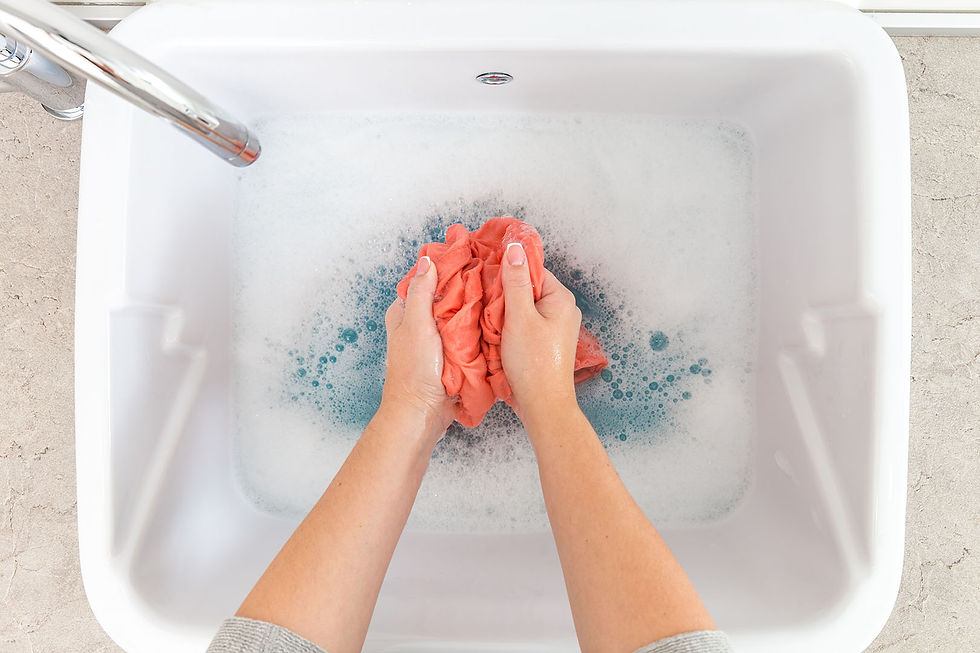
Hand washing is much gentler than machine washing, so it helps to preserve fibers and detail-work on your garments. It also uses less water and demands no energy.
3. Use cold water
By choosing cold water settings as much as you can, you can reduce your carbon emissions significantly and cold water also protects the fabric.
4. Use a sustainable laundry detergent
Although you have to wash less often, it’s great if you can select a sustainable laundry detergent. It's no surprise that most commercial laundry detergents have harsh chemicals that are linked to cause toxic runoffs that eventually end up in our water bodies taking a toll on the ecosystem present there and the detergents also damage your clothes. There are alternatives that are available in your country. Research and choose what matches to your convenience.
5. Consider drying alternatives
According to an article on Grist, the energy consumption of the dryer in your washing machine is equal to that of a new refrigerator, clothes washer and dishwasher combined. Hang your clothes to dry preferably outside and under the sun. This way your clothes can enjoy the benefits of the sun’s natural antimicrobial effects and avoid clothes shrinkage. The constant motion of dryers and the friction caused by it damages your clothes.
6. Choose natural fabrics
Understanding what makes up our garments is crucial to it determine it sustainability. Garments made from natural materials such as cotton or jute are products of agriculture while garments made from synthetic materials such as polyester or nylon are byproducts of the fossil fuels industry. When washing these synthetic materials, tens of millions of microplastics are released with each wash. Opt for natural fabrics while shopping instead of synthetic ones. If you already happen to own a synthetic pieces, avoid washing them in a washing machine and using a laundry detergent. Instead simply wet the piece using your hands and leave it in the sun to dry. Although not a perfect solution, it does help in reducing the amount of microplastics shedding that may enter rivers and oceans from washing.


Great ideas written in an amazing way